Wadiyars of Mysore
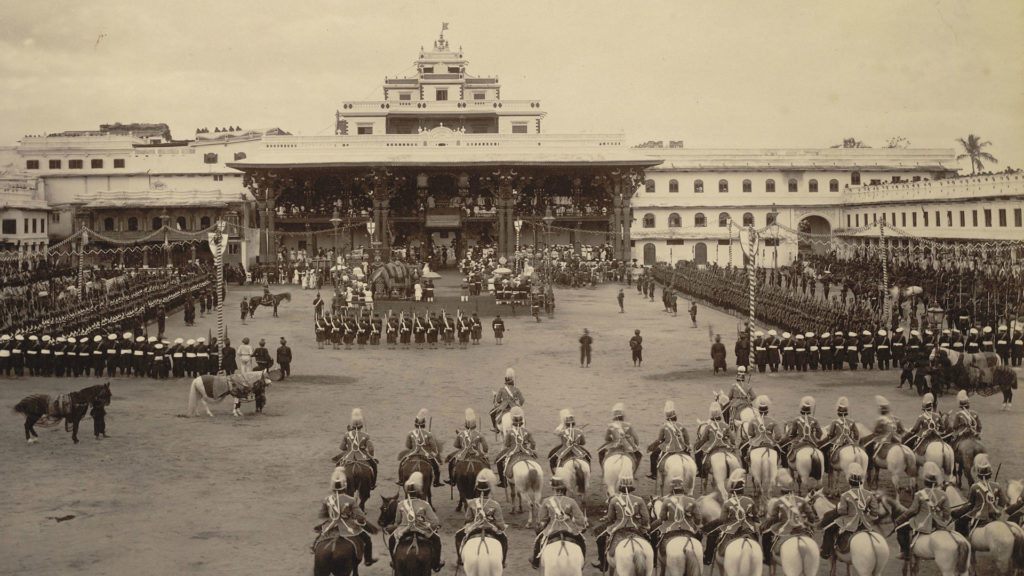
The Wadiyars have been the Custodians of the rich traditions and culture of the Deccan, inherited from their predecessors, the Kadambas, the Rashtrakutas, the Gangas, the Chalukyas, the Hoysalas, and lastly the Vijayanagara Empire. The Wadiyar Dynasty, over its 600 year reign has been witness to the rise and fall of India’s greatest empires, has overcome the tyranny of usurpation, and withstood many a change in political landscape. Despite these upheavals the Dynasty produced the greatest times of prosperity the Deccan has seen. Throughout these 600 years the Wadiyars of Mysore have strived to preserve, nurture, and further cultivate the rich culture of the Deccan that was passed on to them via their predecessors. The narrative of the Deccan and that of the Wadiyars of Mysore are interwoven and the richness of the Deccan culture finds efflorescence in their age-old tradition.
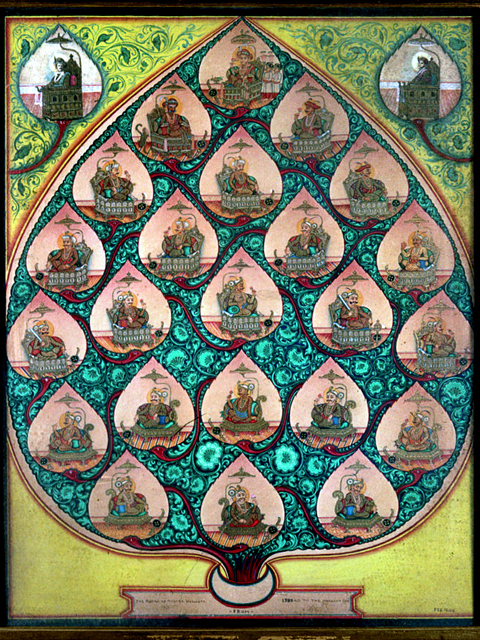
The Wadiyar Dynasty was founded in 1399 C.E., by Yaduraya. They remained vassals and and later Viceroys to the Vijayanagara Empire, that had dominion over most of Peninsular India. With the decline of the Vijayanagara Empire, the Wadiyars under Raja Wadiyar I wrested control of Srirangapatna, and then further proceeded to expand under his successors, reaching great heights of prosperity under rulers such as Kanteerva Narasihmaraja Wadiyar I, and Chikka-Devaraja Wadiyar in the 1600’s.
In the years following, during the 1700’s, Hyder Ali, the Commander-in-Chief or Delavoy of Mysore usurped power from the Wadiyars, later his son Tipu Sultan, would declare himself ruler of the state and look to completely overthrow the Wadiyars. He was however thwarted, in no small part due to the efforts of Maharani Lakshmammani Avaru, wife of Krishnaraja Wadiyar II, and defeated in the Fourth Anglo-Mysore War.
Maharani Lakshmammani Avaru would successfully see the Kingdom return to her Grandson Mummadi Krishnaraja Wadiyar (Krishanaraj Wadiyar III), thereby ushering in the Princely Era of Mysore, which would take Mysore to newer heights of Prosperity during the Golden Age of Mysore with visionary leaders such as H.H. Chamaraja Wadiyar X, H.H. Nalvadi Krishnaraja Wadiyar, and H.H. Dr. Jayachamarajendra Wadiyar Bahadur.

Lineage of Wadiyars
Coat of Arms
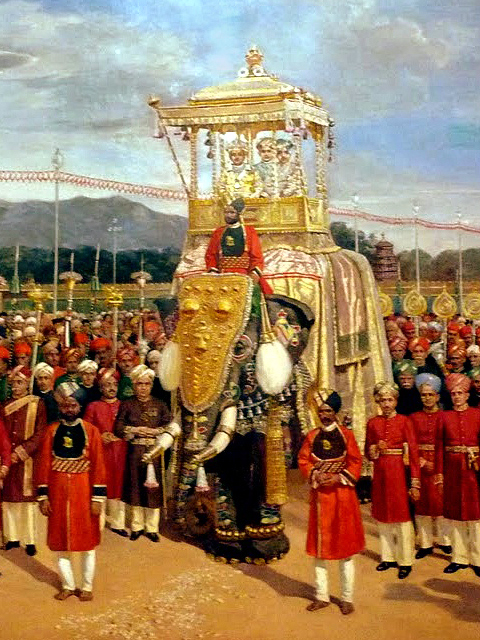
Dasara In Mysore

The Royal Coat Of Arms
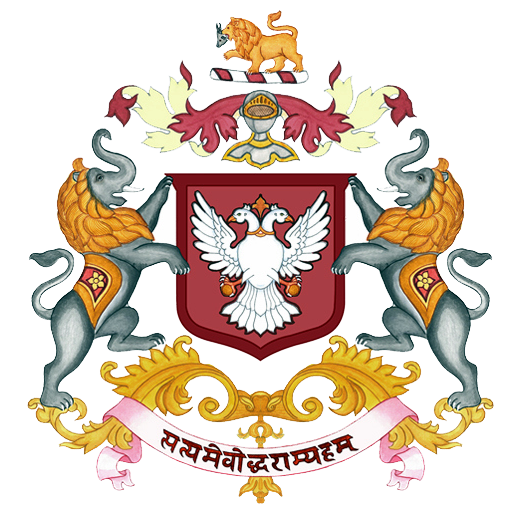
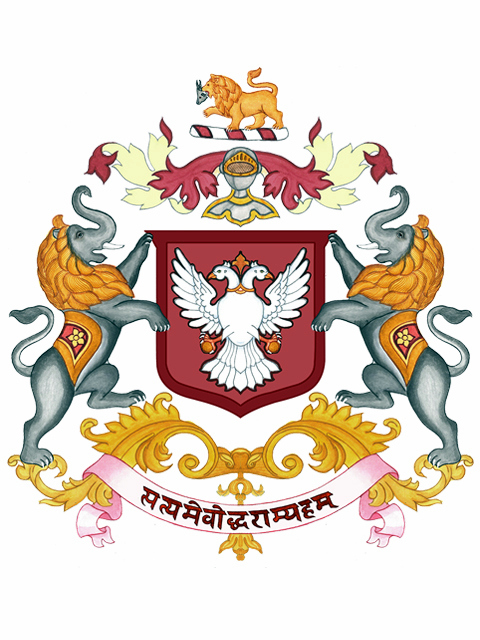
The Coat of arms of the Royal State of Mysore, was designed by Robert Taylor, Master of Arts, a graduate from Cambridge University and an employee of the Bengal Civil Service. In the centre of the royal coat of arms is the mythical Gandabherunda. The bird symbolizes strength, and is often shown to be aggressive. It has been said that Achyutaraya, one of the later kings of the fabled Vijayanagara empire, minted coins bearing the Gandabherunda, holding an elephant in each of it’s arms and beaks. The motif is thought to have been passed on to Mysore, along with the rest of the traditions and legacy of the empire. The two heads facing opposite directions are supposed to stand for Justice and Vigilance: when one head sleeps the other keeps awake, thereby fulfilling their duty of eternal protection.
It is held on either sides by the elephant-headed lion Sharabha that again stands for unprecedented strength and valor. In the pinnacle of the crest stands a majestic lion, holding the severed head of a ‘Mahisha’-symbolic of the victory of the state Goddess Chamundeshwari over the evil Mahishasura. The lower portion bears the ‘Dhyeyavakya'(oath) of the Maharajas सत्यमेव-उद्धाराम्यहम् (I shall only uphold the truth). The individual constituents are held together by creepers and vines. The royal flag is red and brown, and an interesting anecdote about the inclusion of red goes thus- Once, while on an expedition, a ruler of Mysore was gifted a piece of red cloth by a ‘Jangama’ (ascetic) who happened to pass by. Their consequent win was attributed by the said Maharaja to the holy red cloth, and since then, the auspicious red came to be a part of the royal flag too.